
Q&A with our CIOs
Chief Investment Officers (CIOs) Gillian Brown and Stephen McLennan reflect on 2025, and their approach to building a portfolio that is resilient by design and positioned for the future.
2025 year in review
Ontario Teachers’ leverages its scale, expertise and innovation to help companies grow and thrive. Our diversified portfolio spans six asset classes, targeting long-term returns above performance benchmarks. We aim to achieve an annual nominal return of 7%, which we believe will keep the plan fully funded over the long term.

$279.4B1
in net assets

Remained
fully funded
for the 13th year in a row

$18.5B
in net investment income

6.7%
one-year total-fund net return

6.8%
10-year total-fund net return

($12B)
negative value add2

2025 marked 35 years of supporting Ontario’s teachers with the establishment of the organization. This is a milestone shaped by trust, innovation and a longstanding commitment to our members. Since our early days in 1990 to our evolution into a diversified global investor, our purpose has stayed the same: helping members retire with certainty and peace of mind.
This anniversary is an opportunity to look back at the leadership, culture and forward-looking choices that built the Plan and how that legacy continues to serve as a foundation for our activities today.
Through active ownership and a long-term perspective, we continue to unlock value across our portfolio and identify opportunities shaped by change. The following spotlights highlight how we are realizing value from infrastructure investments, investing in the next shift in artificial intelligence, and strengthening value creation across our portfolio through an integrated approach.

For nearly 25 years, airports have been a cornerstone of our infrastructure portfolio— essential assets that connect people, drive economic growth, and support global trade. Since our initial investment in 2001, we built a portfolio across five major European hubs: Birmingham, Bristol, Brussels, Copenhagen and London City.
As active owners, we provided not only capital but strong governance and operational oversight. Learn how we helped drive growth and modernization, of these airports.

The technology landscape is undergoing incredible transformation. Nowhere is this trend clearer than with generative artificial intelligence (GenAI) models—those that produce original content and ideas—which are scaling up in both their computing power and capabilities. Learn about the opportunity emerging for investors, particularly in the field of GenAI.

Value creation is a core driver of investment returns and portfolio resilience. In 2025, we unified our value creation and portfolio management professionals across private investment platforms into a single, elevated function: the Portfolio Solutions Group (PSG). Learn more about this purposeful shift.

In 2025, Ontario Teachers’ reaffirmed its commitment to fostering inclusion and reconciliation through the development of our Indigenous Action Plan (IAP), a first-of-its-kind initiative among Canadian pension plans. The IAP outlines the role we can play as a pension administrator, investor and employer in supporting Indigenous inclusion. Learn about our progress in 2025.
“I am pleased to report that the plan remains fully funded for the 13th consecutive year, delivering a positive investment return for members in a year marked by continued uncertainty and market volatility.”
– Steve McGirr, Chair
“The unique thing about Ontario Teachers’ is an ability to harness long-term commitment with a desire to work hard with management teams to help them grow their businesses. Everybody who works here really cares about our members which ensures that our actions are shaped by what is best for them.”
– Jo Taylor, President & CEO
Ontario Teachers’ investment program is tailored to generate strong and steady risk-adjusted returns to pay members’ pensions over generations. Since Ontario Teachers’ inception in 1990, almost 80% of the plan’s pension funding has come from investment returns, with the remainder coming from member and government/designated employer contributions. Net assets3 have grown from $20.1 billion in 1990 to $279.4 billion at the end of 2025.
Chief Investment Officers (CIOs) Gillian Brown and Stephen McLennan reflect on 2025, and their approach to building a portfolio that is resilient by design and positioned for the future.
Diversification through portfolio construction spreads risk across time horizons, asset classes, geographies and sectors. This approach aims to achieve stable total-fund returns and perform well in various investment environments while mitigating any individual investment loss on the overall fund.
As at December 31, 2025
Our global presence enables us to pursue compelling international opportunities and maintain a diversified portfolio that supports resilience. With investments in Canada, the United States, Latin America, Europe and Asia-Pacific, we focus on balancing growth and stability while leveraging local expertise to drive superior returns.
Canada, as our home market, remains a cornerstone of our operations and investing footprint. With around one-third of our gross assets located in Canada, we are deeply rooted in our home country. Our local expertise enables us to identify opportunities that deliver strong, risk-adjusted returns while contributing to the Canadian economy.
Notable highlights over the year include:

$96 billion
in gross investments in Canada
As the largest and most liquid market globally, home to some of the world’s most innovative companies, and the location of about one-third of our gross assets, the U.S. remains a key region for Ontario Teachers’. The country has also been an important driver of returns for the fund since its inception in 1990.
Investments highlights this year included:

$117 billion
in gross investments in the U.S.
With investments across infrastructure, real estate, healthcare, financial services and technology, EMEA represents a significant and diversified part of Ontario Teachers’ global portfolio. The region has been an important area of long-term investment, supported by local expertise and partnerships across multiple European markets.
Notable portfolio highlights from the year include:

$56 billion
in gross investments in EMEA
Asia-Pacific provides Ontario Teachers’ with exposure to long-term growth opportunities in key markets including Australia, India and North Asia. Ontario Teachers’ has been investing in the region for more than two decades, with a focus on assets and platforms that support long-term value creation.
Investment highlights this year include:

$26 billion
in gross investments in APAC
With investments primarily focused on infrastructure, natural resources and real estate, the region continues to provide attractive investment opportunities for the fund. Ontario Teachers’ has been investing in Latin America for more than three decades.
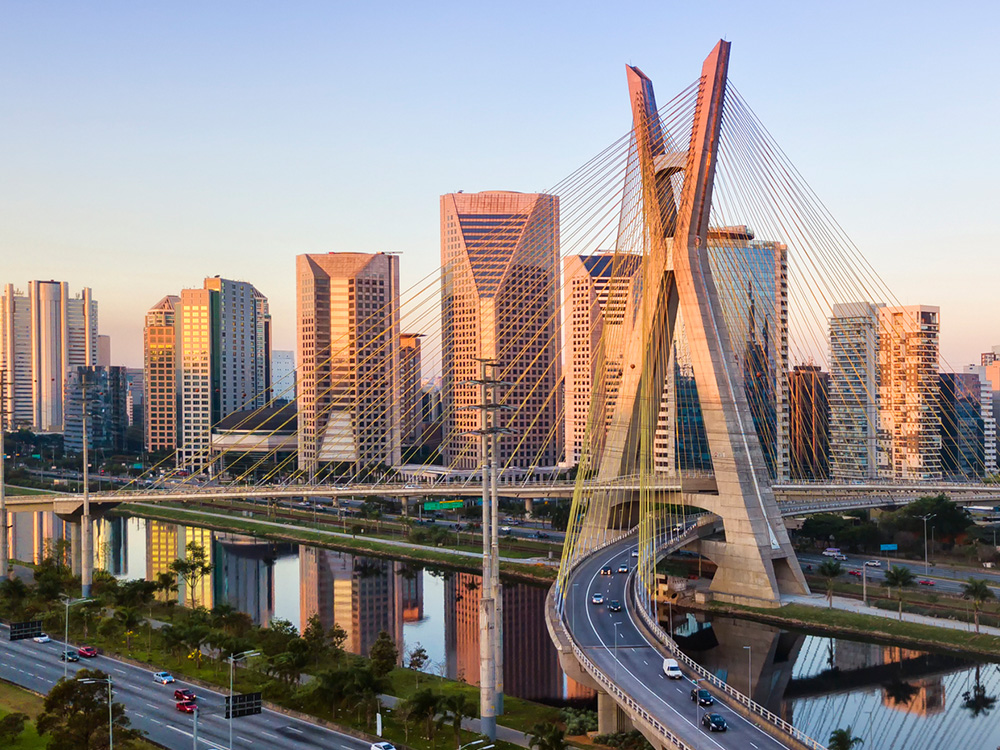
$17 billion
in gross investments in Latin America
Our approach to sustainable investing reflects our view that effectively managing sustainability-related risks and opportunities supports long-term value creation and helps deliver strong, risk-adjusted returns for our members.9
In 2021, we set interim targets to reduce portfolio carbon emissions5 intensity by 45% by 2025, compared to a 2019 baseline. We are proud to have achieved a 50% reduction of portfolio carbon emissions intensity, exceeding our target.
Decreased portfolio carbon emissions intensity by
50%↓
exceeding our 2025 emissions intensity target
As of year-end 2025, we have cumulatively engaged 32 private companies through the PART program, representing approximately one-third of all eligible companies. Nearly all participating companies have completed a decarbonization study and 16 have established Paris-aligned targets, representing more than $30.4 billion in assets under management.
While we made meaningful progress, we did not fully meet our 2025 coverage target, reaching approximately 52% coverage versus our goal of 67%6. This outcome was due to the timing of some anticipated transactions and initiatives that were not completed before year-end. However, subsequent to year-end, we signed an agreement to exit an asset with significant emissions; when completed on a pro forma basis, this would increase PART coverage to 64.9% of eligible emissions, all else being equal.
We remain confident in the value of the PART program and will continue to build on an iteration of the program as part of our 2026-2030 climate strategy announced in February 2026, supporting decarbonization through active ownership and transition planning.

Victoria Power Networks (VPN) continued to advance its decarbonization agenda in 2025, reporting the achievement of a 32% reduction in Scope 1 and 2 carbon emissions from its 2019 baseline, exceeding its 2030 target. Progress is being driven by the decarbonization of Victoria’s electricity generation together with upgrades that enable greater renewable integration and cleaner operational practices, including the transition of public lighting to LEDs.
We continue to build our capacity to invest in companies and assets that support the transition to a lower-carbon economy. These green investments help us capture attractive long-term opportunities while contributing to the reduction of GHG emissions. As at December 31, 2025, our green investments totalled approximately $32 billion compared to $34 billion in 2024. The year-over-year decrease reflects the sale of and/or valuation adjustments to certain green assets.7 As part of our 2026-2030 climate strategy, this is the final year we will report a green investment number.

Mahindra Susten is a premier independent power producer and provider of engineering, procurement and construction services in India. The company is building a diversified 5.5 GW portfolio across solar, wind, energy storage and green hydrogen.
In 2024, Mahindra Susten commissioned a 150 MW hybrid solar-wind project in Maharashtra, and expanded its solar capacity to 1.55 GWp.
Sustainability is embedded across operations through decarbonization targets, water-positive practices and a strong focus on circularity, including a 90% solar panel waste recycling rate in 2024. The company also supports local economic development through job creation and skills training, reaching more than 15,000 individuals in 2024.
The climate targets we set in 2021 were designed to help the fund navigate the energy transition by supporting transition-aligned investment and strengthening portfolio company resilience, as part of our long-term value creation approach.
Meeting our 2025 emissions-intensity reduction target a year ahead of schedule provided an opportune moment to consider our go-forward approach to addressing climate opportunity and risk, integrating current realities in the energy transition and revalidating the levers we have to drive real-world impact.
In February 2026, we announced our 2026-2030 climate strategy with a 2030 target of $70 billion in Climate Transition Aligned (CTA) private assets, which encompass investments in companies that are decarbonizing their operations and those enabling the global energy transition. This reflects a sizable ambition to approximately double holdings in CTA assets over the next five years8.
Our focus is on delivering outstanding service across every channel for a seamless member experience. Drawing on real-time data and insights, we aim to understand the evolving needs of our members from early in their careers into retirement. This allows us to provide information and support tailored to each stage of their pension journey, reinforcing member trust. We are committed to serving members when and where they need it most, so they are empowered to make informed decisions with confidence.
We paid
$8.5 billion
in benefits to retired Ontario teachers and their beneficiaries
Our consistently high service quality scores demonstrate our ongoing dedication to service excellence. The Quality Service Index (QSI), our primary performance measurement, collects an independent survey from a sample of members throughout the year. In 2025, 93% of our members were satisfied with our service, and 46% gave us a perfect score.
In 2026, we will transition from QSI to a more comprehensive metric that measures both member trust and satisfaction. This enhanced approach will help us identify member needs faster, deliver more personalized service and protect trust.

Bill 124 retroactive salary adjustments have been completed for eligible members who retired in the school years between 2019-2022.

We launched Clarity, an internal virtual assistant, to simplify work for our teams and serve members faster.

We leveraged new data sources to deepen our understanding of members and gain more actionable insights.

We expanded our digital engagement with working members to help foster engagement and trust earlier in their pension journey.
To better meet our members’ changing needs, we are transforming our contact centre into a Complex Care Centre. As more members are guided to digital self-service channels for quick and straightforward matters, our highly trained Complex Care Team can assist those members with complex scenarios. We ensure every member receives the right level of care when it matters most.
186,000
working members
160,000
pensioners
346,000
total number of working members and pensioners
58.8
average retirement age
$53,300
average starting pension
25.9
average years retired members expected to collect a pension
"I am years away from retirement but the ongoing emails, notices in my account and communications on the plan performance have been steady, easy to understand, and helpful."
At Ontario Teachers’, we take a people-first approach that encapsulates everything from culture to career development to mental health and well-being. Across our global offices, we work to cultivate an environment that empowers, develops, and promotes belonging.
Our strength and long-term success are rooted in our team. We view our ability to partner with employees as crucial to enabling a best-in-class and high-performing workforce. In 2025, we continued to advance in our strategic focus areas: building for the future, developing talent, and embracing employee well-being. We made progress against these focus areas in meaningful ways.
Building for the future
We started to define what future-ready leadership looks like across the organization—with greater emphasis on communicating performance outcomes, providing direct and honest feedback, and having an orientation around the importance of digital transformation and emerging technologies.
Developing talent
We continued to focus on leadership capabilities as we recognize the need to continually re-skill and upskill for the future. We also continued to experiment with AI across the organization and provided resources to unlock where the technology can be used to free up team members for higher-value, strategic work.
Embracing employee
well-being
We have partnered with a leading fertility and family care platform and extended fertility coverage worldwide. We also achieved LEED and WELL gold certification for our workplaces by prioritizing sustainability, inclusivity, and employee wellness.

For four consecutive years, we have supported employees around the globe to give back through coordinated volunteer initiatives and an employee-led donation program. Learn more about how our volunteerism initiatives and employee-led giving program continued to grow.
In 2025, our Employee Resource Groups delivered numerous events globally, emphasizing the importance of fostering everyday inclusion, and celebrating the diverse backgrounds of our team through cultural awareness and educational initiatives. Additionally, we held educational and celebratory engagements in recognition of Lunar New Year, Black History Month, International Women’s Day, Earth Day, Pride, National Day for Truth and Reconciliation in Canada, and World Mental Health Day. We continue to see engagement with the ERGs grow.


1 All figures as at December 31, 2025 and expressed in Canadian dollars unless otherwise noted.
2 Value add is the amount of return in excess of (below) benchmarks after deducting management fees, transaction costs and administrative costs allocated to the active programs (includes annual incentives but does not include long-term incentives).
3 Net assets include investment assets less investment liabilities (net investments), plus the receivables from the Province of Ontario, and other assets less other liabilities.
4 Percent of total gross fair value of investments based on country of primary listing, location of head office or location of property. Gross investments include securities sold but not yet purchased and exclude investment-related receivables and investment-related liabilities.
5 Since we convert all greenhouse gases to tonnes of carbon dioxide equivalent (tCO2e) in our calculations, the terms “greenhouse gas” or “GHG” and “carbon emissions” are used interchangeably in this report.
6 Our PART coverage metric is subject to external limited assurance by Deloitte LLP. See 2025 Annual Report pages 148-151 for further details. See 2025 Annual Report pages 155-156 for the calculation methodology.
7 Our green investments include the eligible green assets designated under our green bond program as well as a broader set of investments aligned with the ICMA Green Bond Principles. This broader definition is not subject to certain technical requirements of our Green Bond Framework, such as the 36-month lookback period.
8 As at June 30, 2025, Ontario Teachers' had an estimated $35 billion in the Paris Aligned Reduction Target and Green Assets programs, which is being used as a proxy for our CTA assets.
9 Sustainability-related risks and opportunities are often referred to as Environmental, Social and Governance (ESG) risks and opportunities. Environmental factors relate to a company’s interaction with the physical environment, including both impacts on the environment (e.g., contamination or greenhouse gas emissions), as well as impacts from the environment (e.g., extreme weather, biodiversity loss or water scarcity). Social factors arise from the relationship between a company and its employees, consumers, suppliers and communities. Social factors include, but are not limited to, labour and human rights, health and safety, diversity, equity and inclusion, and product safety. Governance factors relate to the system of structures a company puts in place to ensure it is effectively directed and controlled. For more information, please refer to our Sustainable Investing Guidelines, which provide a full description of our definition, approach and framework.


