L’économie physique : investir dans un paysage énergétique en mutation
La version française de ce document n'est pas disponible. Veuillez consulter la version anglaise.
At a glance
- Rising electricity demand and a focus on energy security are increasing the need for reliable and diversified energy systems.
- Physical climate risk is becoming part of investment analysis, with implications for asset performance, valuation and resilience.
- Electrification and artificial intelligence are increasing demand for infrastructure - from power generation and grids, to storage and land.
- These trends can create opportunities for long-term investors, but they require disciplined underwriting and a clear understanding of the related risks and dependencies.

The investment landscape is becoming more complex. Electricity demand, geopolitical volatility, ageing infrastructure and the growth of artificial intelligence are converging as the physical effects of climate change become clearer.
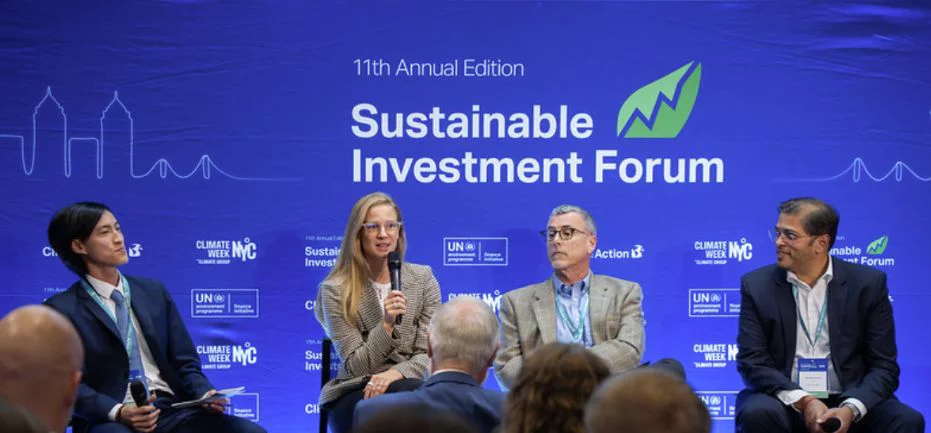
These shifts were central to discussions at Climate Week NYC in late September, where Ontario Teachers’ joined investors, business leaders and policymakers in panels, roundtables and investor forums. The week provided an opportunity to compare views with partners and consider how long-term capital can support resilient assets and sustainable growth while maintaining investment discipline.
For long-term investors, this calls for a pragmatic view.
The transition is not simply about replacing one source of energy with another. It is about the infrastructure, resources and systems needed to meet demand while building a more secure, resilient and lower-carbon future.
We see this as a focus on the physical economy: the power, grids, storage, infrastructure and natural resources that support growth and technological change.
Energy security is reshaping the opportunity set
Energy security is again shaping business and investment decisions.
At its core, this means reliable access to energy, especially electricity. Electrification is expanding across transport, buildings and industry, while AI and data centre growth are adding to demand.
Geopolitical uncertainty is also increasing the importance of diversified energy systems.
Ageing grids, transmission constraints and long development timelines can create bottlenecks even where generation is available. The International Energy Agency estimates that meeting expected growth in electricity demand by 2035 will require grid capacity to increase by at least 30%, equivalent to adding or replacing 25 million kilometres of power lines.1
This points to a need for investment in power generation, grids, storage and the infrastructure that supports electrification.
For investors, the opportunity can be attractive, but it still requires disciplined underwriting and execution.
This means understanding demand, commercial fundamentals, execution risk, the policy environment and the durability of an asset’s competitive position.
Resilience is becoming part of fundamental analysis
The physical effects of climate change are becoming more relevant to how assets are assessed and managed. Weather-related natural disasters accounted for 92% of approximately US$224 billion in global natural-disaster losses in 20252. The investment implications extend beyond direct physical damage.
An asset’s performance can be affected through its workforce, supply chains, customers, access to power, insurance and surrounding infrastructure. These risks can also compound one another.
For investors, the challenge is to move beyond identifying exposure. The question is how to turn climate data and forecasts into asset-level intelligence that can inform underwriting, valuation and asset management.
This is where active ownership is valuable.
Where risks are material, resilience measures can protect operations, reduce disruption and preserve long-term asset value. In some cases, they can also improve performance and competitiveness.
This is not about climate analysis for its own sake. It is about understanding financial risks and acting on them where we can.
AI is a physical infrastructure story - with broader implications
Artificial intelligence is often discussed as a digital transformation, but the infrastructure behind it is physical.
Data centres require electricity, grid connections, cooling and land. As AI adoption grows, so does demand on those systems.
This could accelerate investment in power generation, transmission, energy storage and other infrastructure. Data centres can in addition support new generation and grid investment where demand justifies it.
There are also dependencies to understand.
Rapid data centre development can affect electricity availability, land, infrastructure capacity and affordability. AI adoption can also have broader implications for communities and workforces, while expectations for governance, responsible deployment and regulation continue to evolve.
These considerations are not separate from the investment thesis. How companies anticipate and manage AI’s impacts - including through appropriate governance and stakeholder engagement - can affect development timelines, operating performance, relationships with communities and employees, and ultimately long-term value.
As with the energy transition, our approach is to assess both the opportunity and the constraints.
The question is not simply what an asset emits at a point in time, but how its business model, operations and investment plans are positioned for a changing world.
Investing in the physical economy
We believe the energy transition remains a long-term investment theme. What is changing is the range of the opportunity set.
Energy security, electrification, AI, infrastructure, physical climate risk and resilience are connected. Understanding these links can help investors identify where capital is needed, where the commercial case is attractive, and where risks lie.
For Ontario Teachers’, that means seeking investments with sound commercial fundamentals while working with the companies we own to strengthen resilience and support credible transition plans.
The opportunity is not simply to invest in a lower-carbon future.
It is to invest in the infrastructure and businesses that enable long-term resilience, security and competitiveness.
1 International Energy Agency (IEA), Modernising Grids in the Age of Electricity, 2026.
2 Munich Re, “Natural disaster figures for 2025,” January 13, 2026.